
Standard Bots Expands AI Robotics Stack and Developer Platform for Industrial Automation
Standard Bots details its approach to industrial robot AI, featuring customer-adaptable models, local inference, and the StandardOS developer platform with APIs and SDKs for robotics application integration.
What changed?
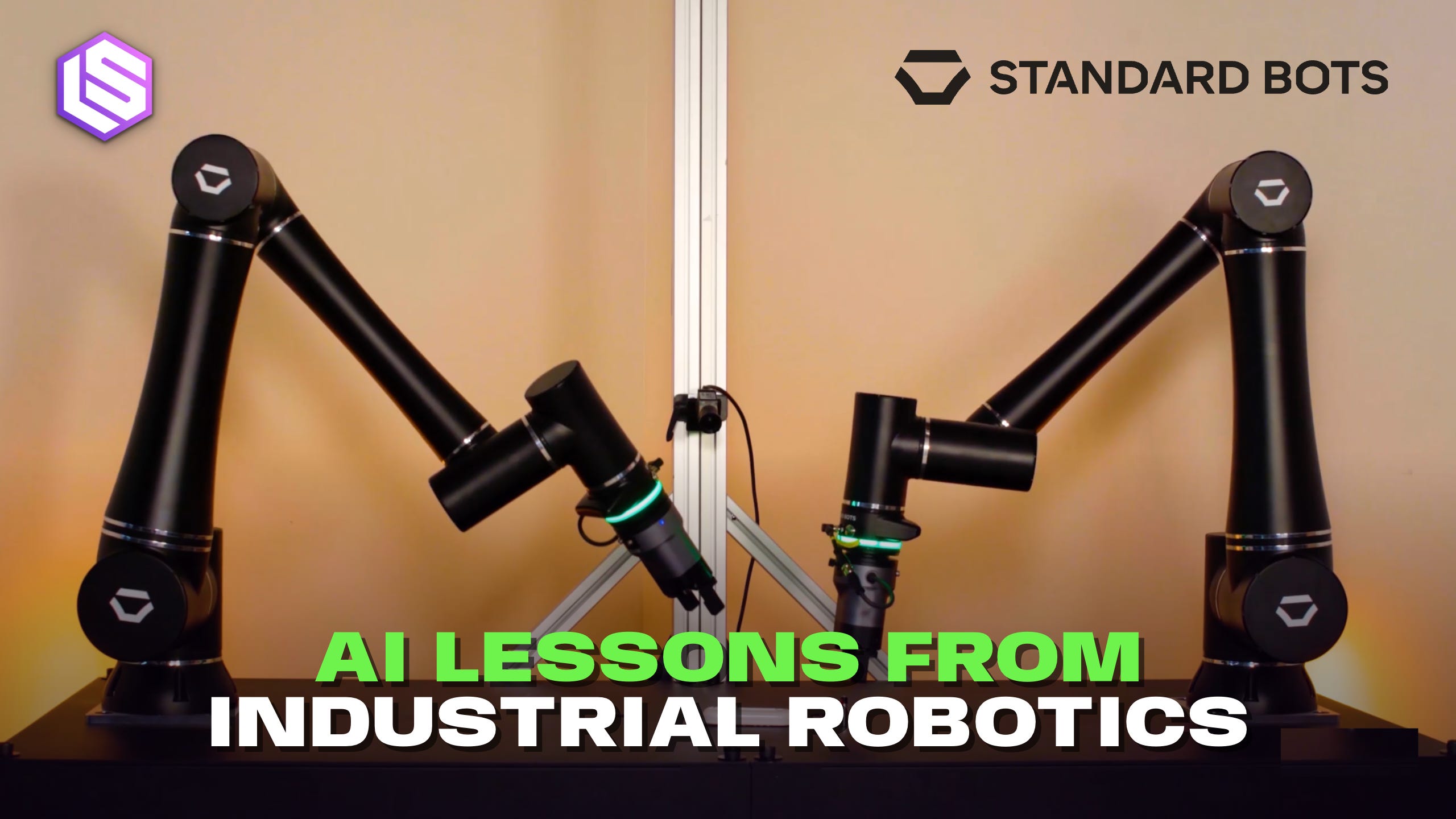
Standard Bots has revealed new details about its industrial robot AI stack and the StandardOS platform. Its robots use pretrained models in the low billions of parameters, designed to identify and manipulate parts under factory conditions for tasks such as machine tending, welding, and assembly. Customers can adapt the shared base model with their own task demonstrations and fine-tuning to address specific needs and edge cases. Inference is performed locally on edge GPUs, enabling real-time action generation from camera and sensor input without relying on cloud connectivity. The StandardOS platform offers APIs and SDKs, allowing external developers to build robotics applications and integrate their own AI models into industrial workflows.
Why does it matter to an everyday developer?
Developers building for robotics or industrial automation can now use the StandardOS API and SDK to interact with Standard Bots hardware, integrate perception and control models, and adapt robot behaviors by demonstrating tasks or handling new edge cases. Local inference ensures applications can run reliably in typical factory environments, where internet connectivity is often unreliable. The ability to integrate third-party AI models, adapt models through targeted data rather than requiring vast new datasets, and deploy changes directly to the robot, provides practical opportunities to develop robust, tailored solutions for real-world manufacturing challenges.
What can the developer do now?
Developers interested in robotics automation can use the StandardOS platform’s APIs and SDKs to build custom applications for Standard Bots robots, bring their own AI models, or fine-tune available models with task-specific data. For production environments, developers can manage deployment to edge hardware and gather local corrections or feedback to iteratively improve robotic routines. While some advanced production scenarios may still require real-world demonstrations over simulation, developers benefit from a modular stack that supports integration and adaptation for a range of industrial use cases.